
Searching for “auto window tinting near me” usually leads to dozens of shops promising the same thing: darker windows, cooler interiors, and better privacy. What most drivers do not realize is that not all window tint performs the same, and the darkest option is not automatically the best one.
The right tint depends on what you actually want from your vehicle. Heat rejection, UV protection, visibility, appearance, longevity, and installation quality all matter more than simply choosing the darkest film available.
What Makes a Window Tint “the Best”?
The best tint is the one that solves your specific problem without creating new ones. For some drivers, that means maximum heat rejection during Oklahoma summers. For others, it means reducing interior fading, improving comfort during commutes, or achieving a cleaner appearance without sacrificing visibility.
A quality tint should provide:
- Strong heat rejection.
- Long-term durability.
- Clear visibility from inside the vehicle.
- Minimal signal interference.
- Reliable UV protection.
- Professional installation with a warranty.
The film itself matters, but installation quality matters just as much. Even premium tint can fail early if it is installed improperly.
Understanding Window Tint Types
Not every tint film performs the same way. The biggest differences come down to material technology and heat rejection capability.
Dyed Window Tint
Dyed film is typically the most budget-oriented option. It darkens the windows and improves appearance, but heat rejection performance is limited compared to newer technologies.
It may work for drivers mainly focused on privacy or aesthetics, but it is usually not the best long-term solution for intense heat exposure.
Carbon Window Tint
Carbon film offers improved heat reduction without relying on metal layers. It provides a clean appearance and better longevity than basic dyed films.
For many drivers, carbon tint creates a strong balance between performance and value.
Ceramic Window Tint
Ceramic tint is considered the premium option because it delivers superior heat rejection while maintaining visibility. High-quality ceramic films can significantly reduce cabin temperatures without requiring extremely dark glass.
This is where many misconceptions about how dark window tint is start to matter. A lighter ceramic film can outperform a darker lower-quality film when it comes to blocking heat.
Heat Rejection vs. Darkness
Visible darkness and heat rejection are two different measurements. A film’s Visible Light Transmission (VLT) percentage determines how dark it looks, while infrared rejection determines how much heat it blocks.
That means:
- A darker, cheap tint may still allow significant heat inside.
- A lighter premium ceramic film can reject far more heat.
- A high-quality film can improve nighttime visibility.
The goal should be choosing the right balance of comfort, appearance, and performance.
Why UV Protection Matters More Than Most Drivers Realize
A quality UV blocking car window tint does more than improve comfort. It helps protect both the vehicle interior and the people inside it.
Long-term UV exposure contributes to:
- Interior fading
- Leather cracking
- Dashboard deterioration
- Increased cabin heat
- Skin exposure during daily driving
Most premium films block up to 99% of harmful UV rays regardless of the darkness level. That means even lighter films can still provide substantial protection.
Drivers who spend significant time commuting often notice the difference quickly once a proper UV blocking car window tint is installed.
Choosing the Right Tint for Your Vehicle
Different vehicles and driving habits call for different solutions.
Daily Commuters
Drivers spending hours on roads often benefit most from ceramic films with high heat rejection and strong UV protection.
Luxury or New Vehicles
Higher-end vehicles typically deserve higher-performance films that preserve appearance while improving comfort.
Company Vehicles and Fleets
Professional-looking vehicles matter for businesses. Consistent tint installation across fleet vehicles helps maintain a cleaner and more polished appearance.
Drivers Concerned About Night Visibility
In many cases, lighter ceramic films provide a better balance than extremely dark films. This becomes especially important when asking, “How dark is window tint for nighttime driving conditions?”
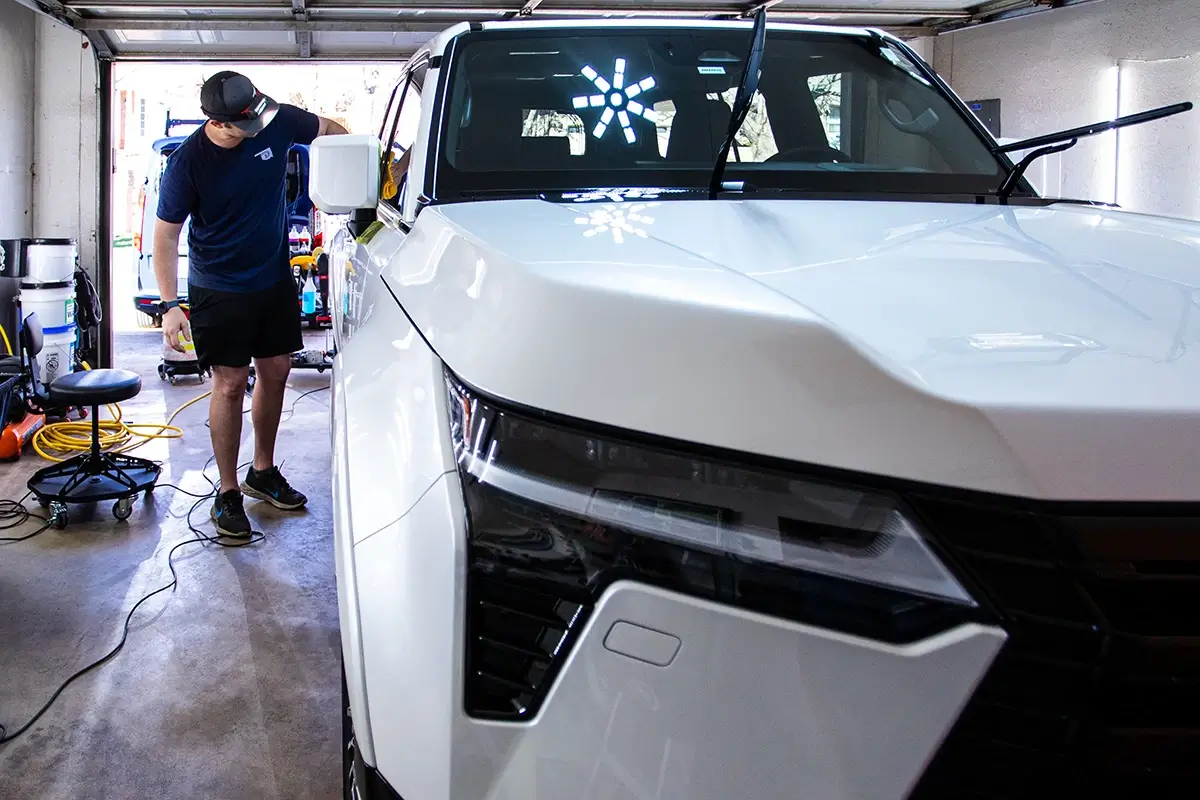
Installation Quality Is Just as Important as the Film
The best film still depends on proper preparation and installation. Poor installation can lead to:
- Peeling edges
- Contamination under the film
- Air bubbles
- Purple discoloration
- Premature failure
Professional installation also ensures the film is applied cleanly to curved glass and sealed properly around edges. Even small installation errors during the window film installation process can affect durability, clarity, and long-term performance.
At DL Fine Auto, we focus heavily on preparation because long-term performance depends on precision from the start.
What to Look for When Searching for Auto Window Tinting Near Me
Not every tint shop offers the same level of workmanship or film quality. Before choosing an installer, look for:
- Warranty coverage.
- Film brand transparency.
- Experience with ceramic films.
- Clean installation environment.
- Real before-and-after work.
- Clear explanation of film options.
Searching for auto window tinting should lead you to a shop that prioritizes education and long-term results instead of simply selling the darkest film available.
Common Window Tint Questions
How dark is the window tint?
Window tint darkness depends on the Visible Light Transmission (VLT) percentage of the film. We offer carbon and ceramic film options with different darkness levels depending on your goals for privacy, heat rejection, appearance, and nighttime visibility.
Is ceramic tint worth the extra cost?
For drivers focused on heat reduction, comfort, and long-term durability, ceramic tint is usually worth the investment.
Can window tint block UV rays?
Yes. Our carbon and ceramic window films are designed to block up to 99% of harmful UV rays while helping reduce interior fading, heat buildup, and daily sun exposure during driving.
Will tint make nighttime driving harder?
Lower-quality dark film can reduce nighttime visibility. Professionally selected carbon or ceramic films typically maintain better clarity while still improving privacy, comfort, and heat rejection during daytime driving.
How long does quality tint last?
Professionally installed high-quality window tint can last for many years. Longevity depends on film quality, installation precision, climate exposure, and how well the vehicle is maintained afterward.
The Best Window Tint Comes Down to Performance and Precision
The best tint is an investment that improves comfort, protects the vehicle, and performs consistently over time.
At DL Fine Auto, we help drivers choose tint based on real-world performance—not gimmicks or shortcuts. We offer carbon and ceramic films designed for heat rejection, clarity, and long-term durability. Every installation includes professional application and lifetime warranty coverage.
If you are searching for auto window tinting near me, our team serves Oklahoma City, Edmond, Mustang, and surrounding areas with premium installation focused on quality first. Whether you want better heat control, improved appearance, or long-term protection, we can help you choose the right film for your vehicle. Get an estimate today.